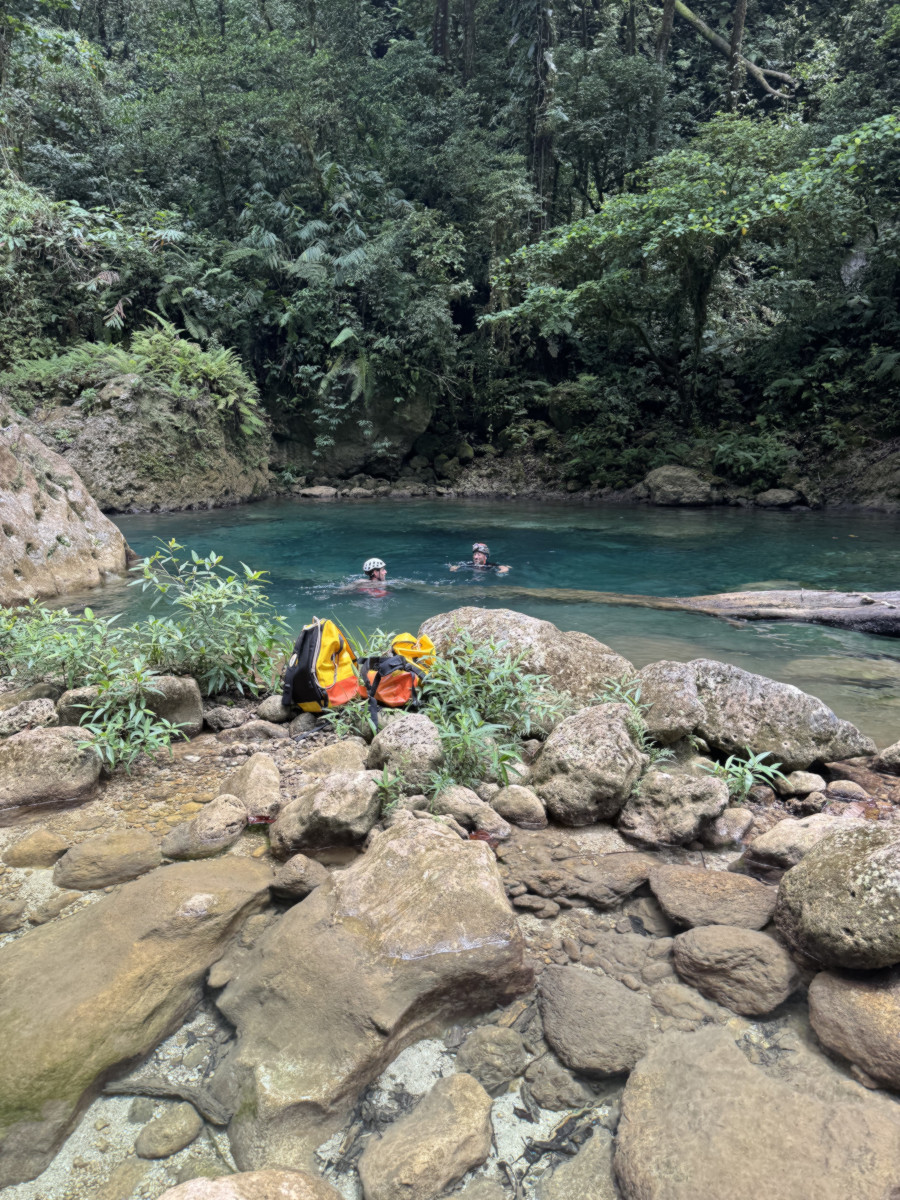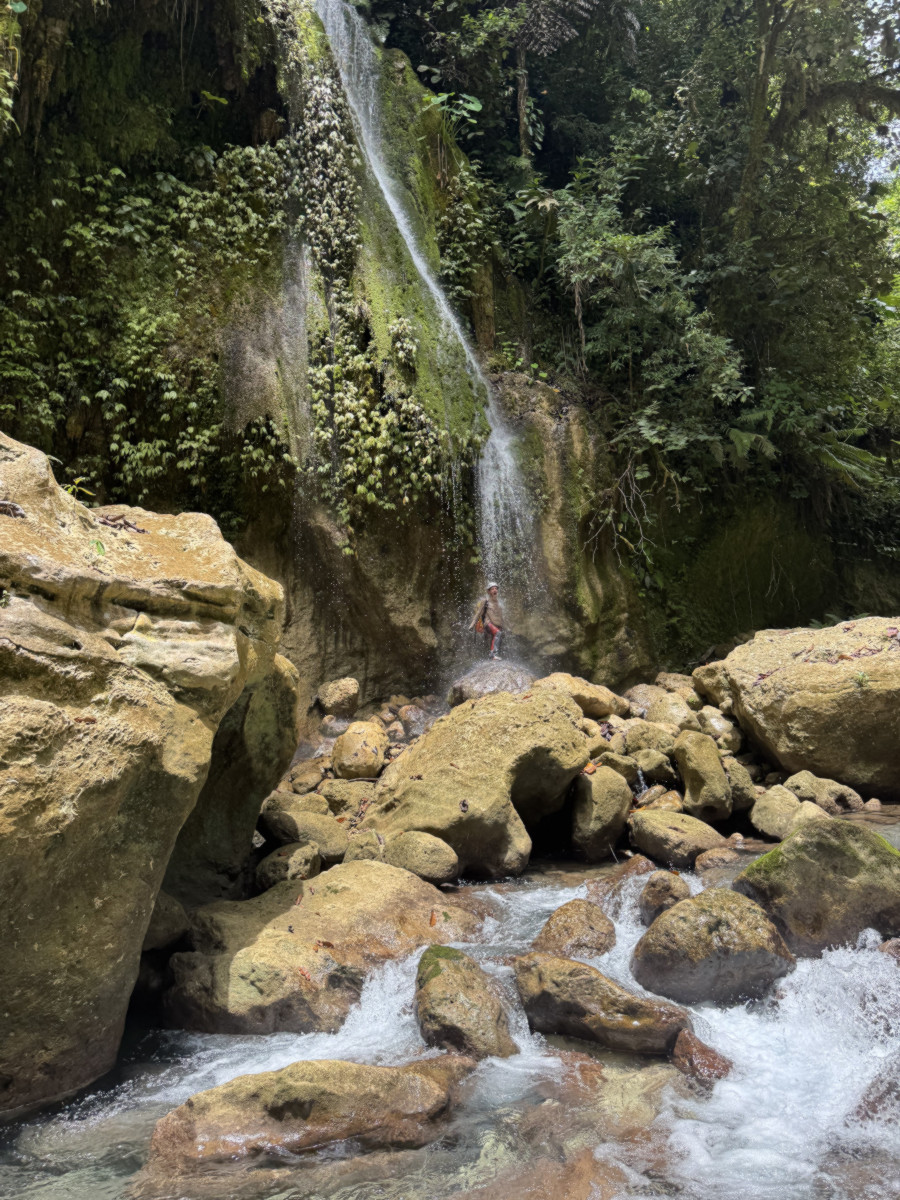

29 January 2026 update

The first setback and the solution to the deadlock!

Two days after giving its approval, the Galuwé ward reversed its decision and barred us from entering its ancestral lands. The reason was, among other things, due to differences between the various members of the ward council.The negotiations between the different parties were again tense, and they lasted three days. Bernard invited a delegation from the ward council to the Palmalmal guesthouse. The discussions lasted the entire morning. Then, the next day, Bernard, Natalia, Katia, Michel and the representatives of Galuwé met with Mr John Liskia, the head of the Pomio district, who had been kept informed by Bernard of the ongoing difficulties. He served as the mediator between the two opposing parties from Galuwé village. Almost 12 people traveled to Palmalmal for the occasion. The district offices are where the meeting is taking place and there is a noticeable tension. It lasts six hours. The next day, discussions resume in Galuwé.

Bernard shows the exploration area to the inhabitants of Galowe.

Meanwhile, informal discussions and meetings were conducted at various levels during the evening and night, particularly at the initiative of the honorable ward counselor of the village of Galuwé, Charles Légère, and Mr. John Liskia. The almost eight-hour-long session was interspersed with multiple internal conversations among the Galuwé villagers. As unexpectedly as it had started, it ended at 5 p.m. with a firm handshake between the negotiators and a final agreement sealed with the council. This peak was succeeded by an indescribable and intense moment of euphoria, with all the villagers exchanging hugs and handshakes among members of the Centre Terre delegation and the locals. The day concluded with happiness and contentment regarding this result. The expedition is now in full swing.

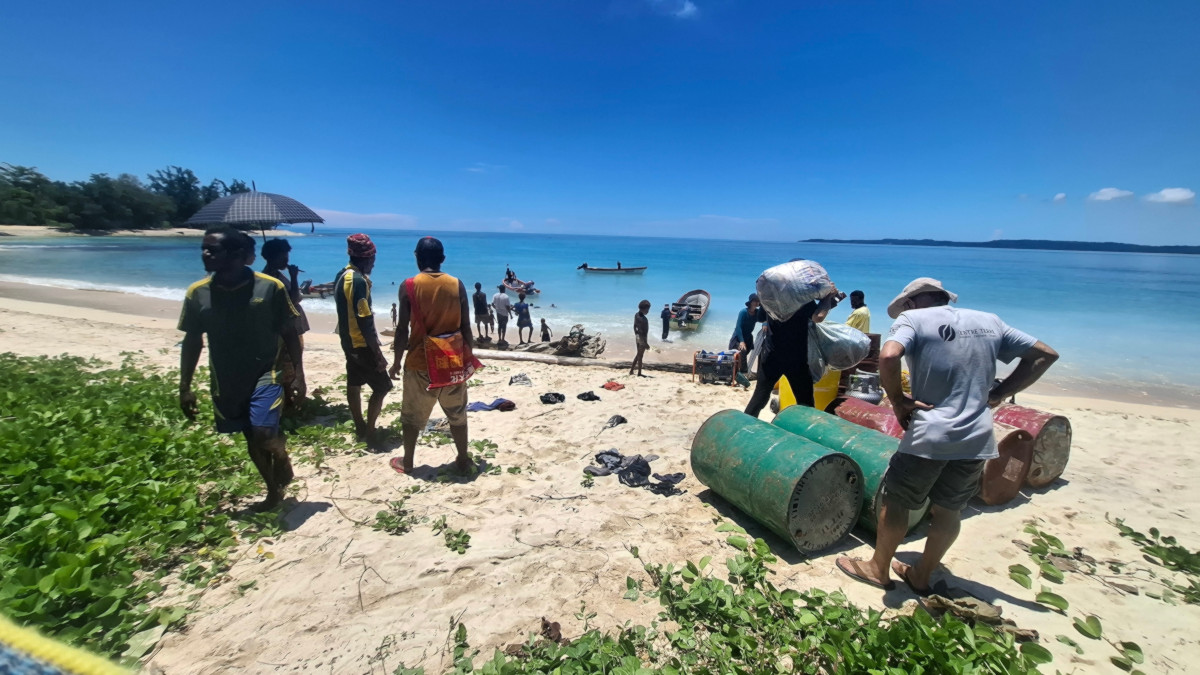
Galowe beach is the waiting place during the ward' lengthy deliberations.

Second setback; a difficult start after all

In an effort to link Mayang to the route that travels north from Pomio to the town of Pakia, Mehdi and Jean-Marc, along with three Papuans, set out on January 20 to establish a trail on the eastern bank of the Galuwé River. This route, which is less than 5 km long and has a total elevation gain of about 1,200 meters, is designed to offer rapid access to the exsurgence in the event of an emergency. It can also be used to evacuate personnel during the planned team change in mid-February in the event that the helicopter cannot fly on the designated day. It's challenging to move through the forest. The terrain is especially rough in addition to having a lot of vegetation. A 200-meter-wide depression with extremely high walls blocks the team's path shortly after they set out, forcing them to turn around before attempting a different route farther north. Regretfully, the team members came upon another inaccessible river center (also called thalweg) after moving forward a few hundred meters. Frustrated, they set up their first camp in the woods beside the track. The next morning, they made two more futile attempts to traverse the same thalweg. After communicating with Bernard on the satellite phone to learn more about the situation, the team quickly decides to scrap the idea to open this trail. The group goes back to Pomio.

Bernard, Michel and Mehdi talk with the Pomio ward counselor about the goal of opening a path.
The 'pathfinding' team with their three companions from Galowe
Jean Marc shows Junior the track under the lens of Yann from the film crew.

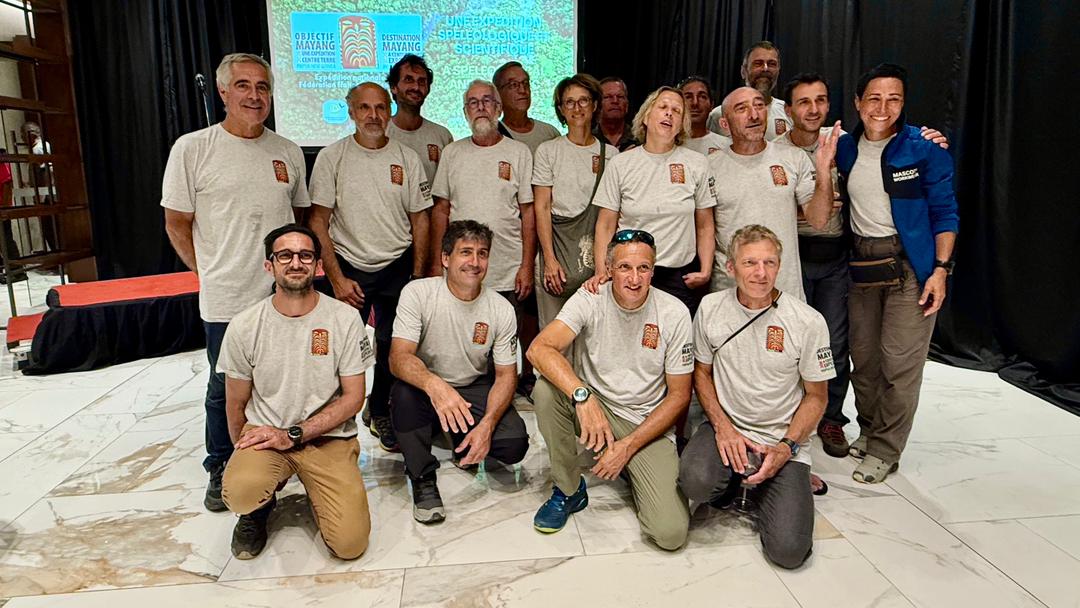
The team is complete

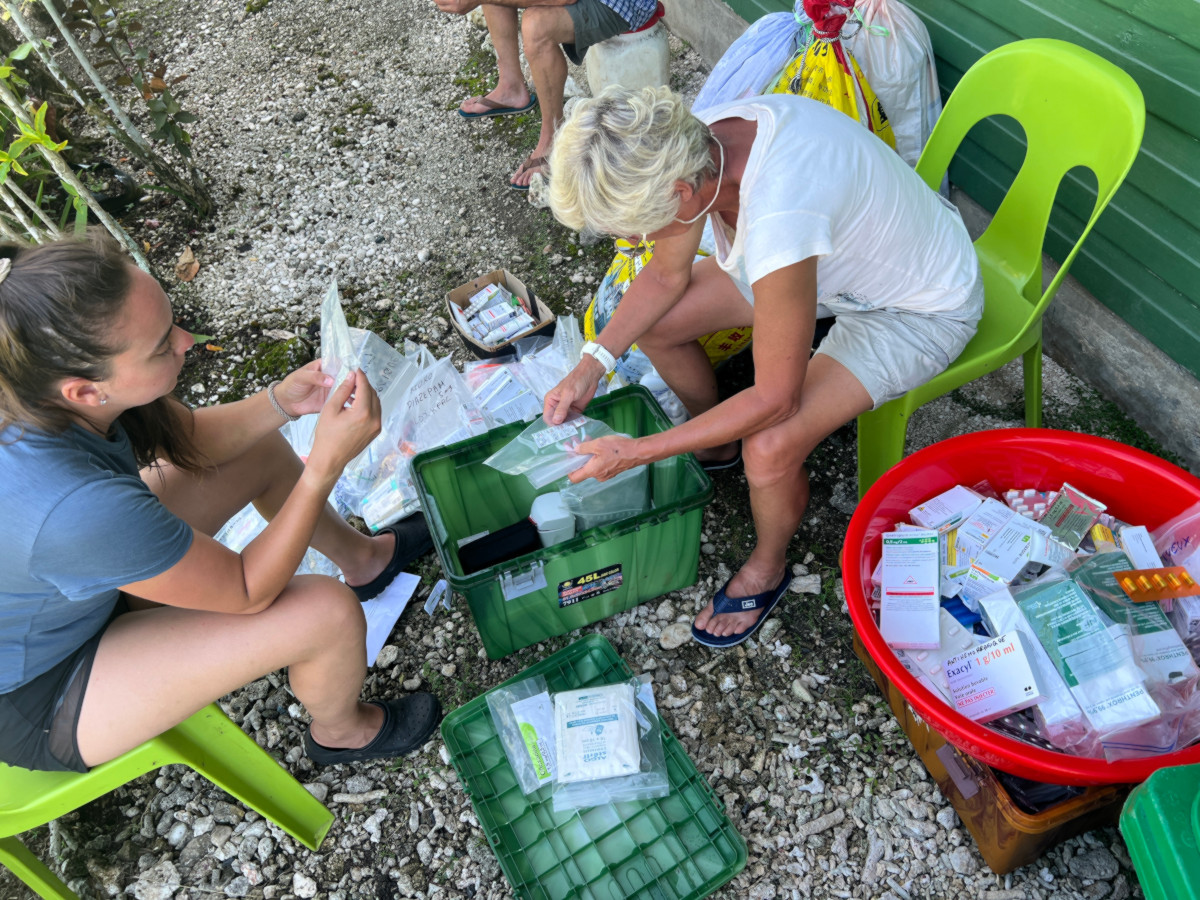
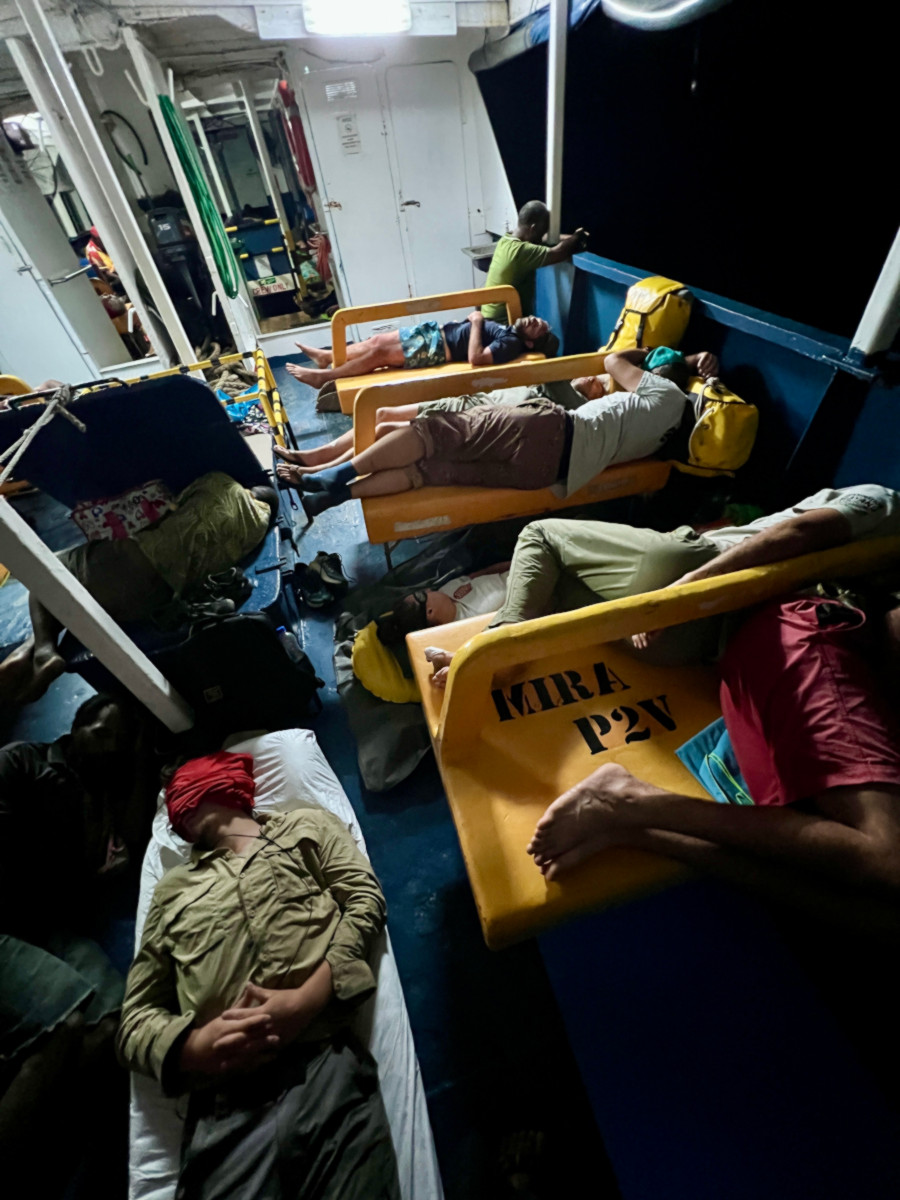
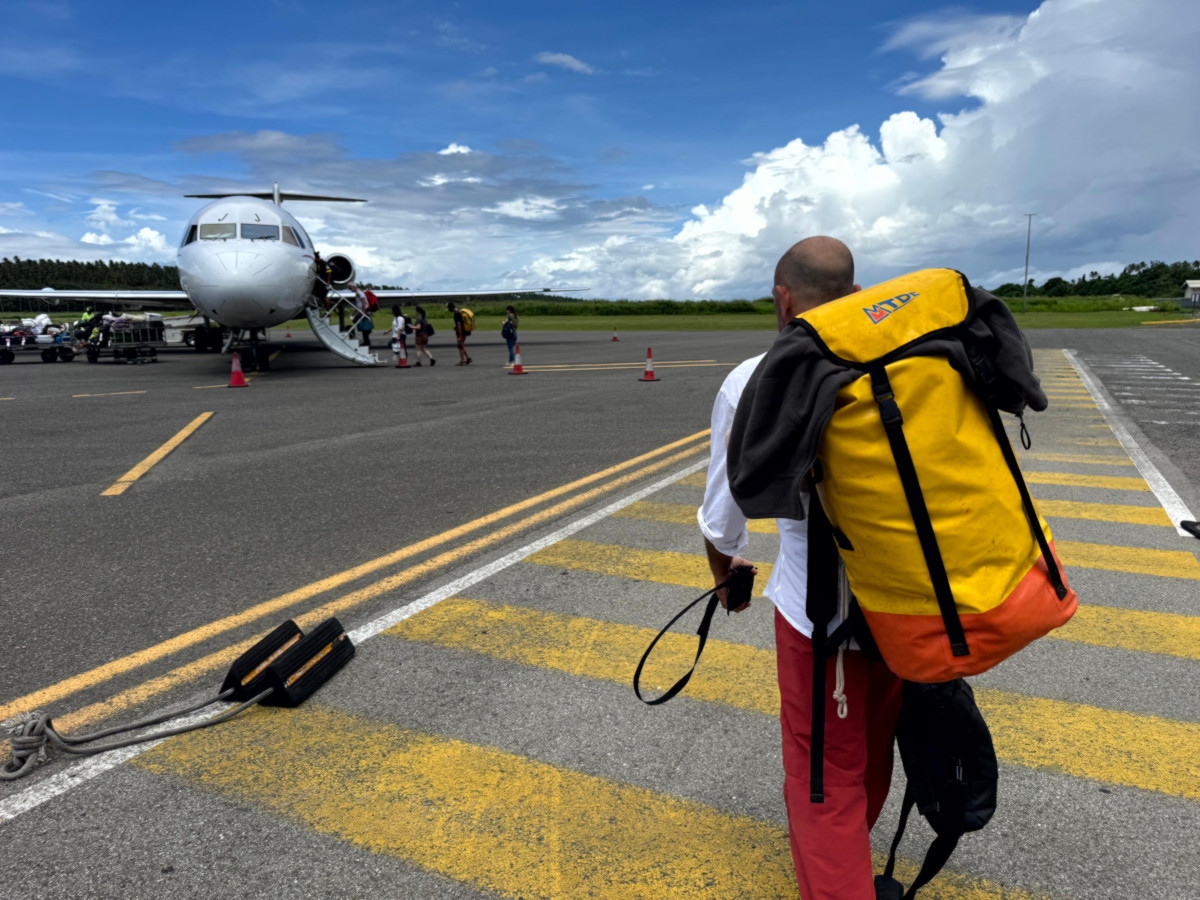
On January 18, the team's final members joined the purchasing group in Kokopo after arriving from France. On the 22nd, they all rode the ferry to Palmalmal with all of their provisions and purchases. They traveled in relative comfort for eighteen hours. They were joined by two scientists from the Binatang Research Center, Pita and Jerrica. The complete Centre Terre crew was reunited in Palmalmal on January 23.

The entire team receives a thorough briefing from Bernard.

Transfer to Galuwé, reconnaissance flight and welcome ceremonies

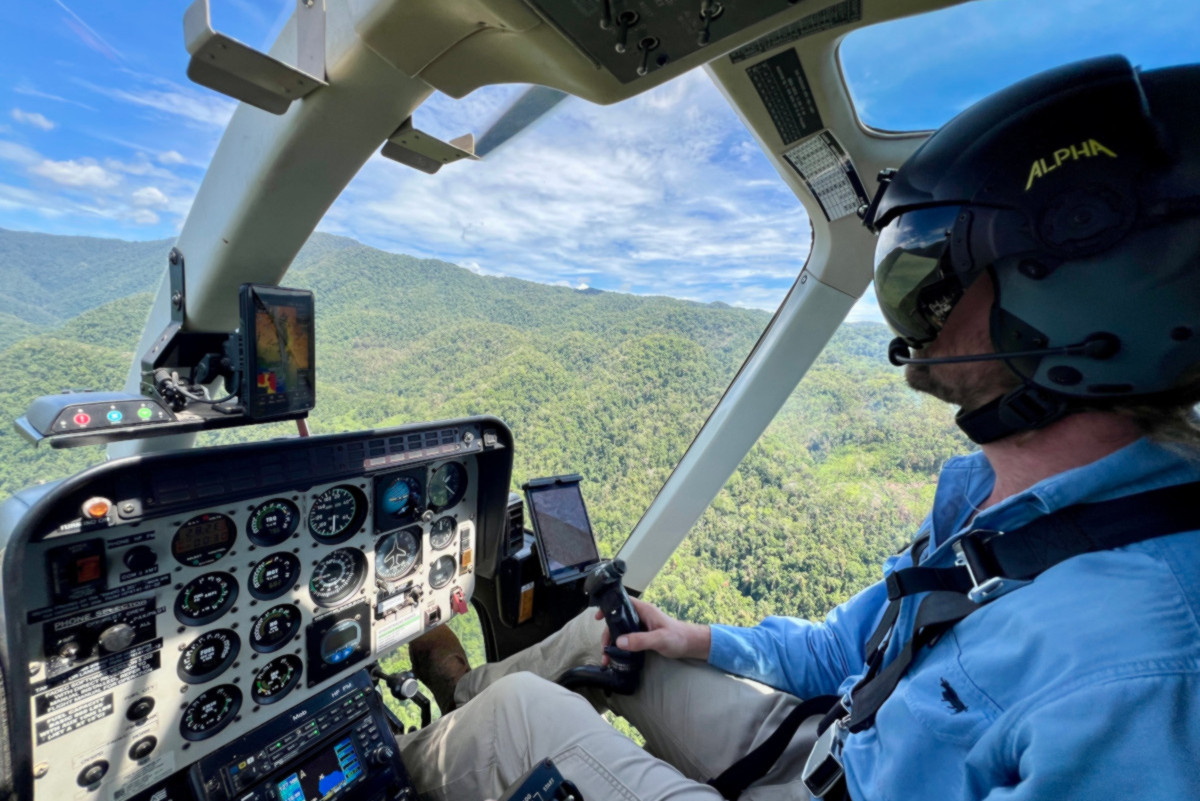
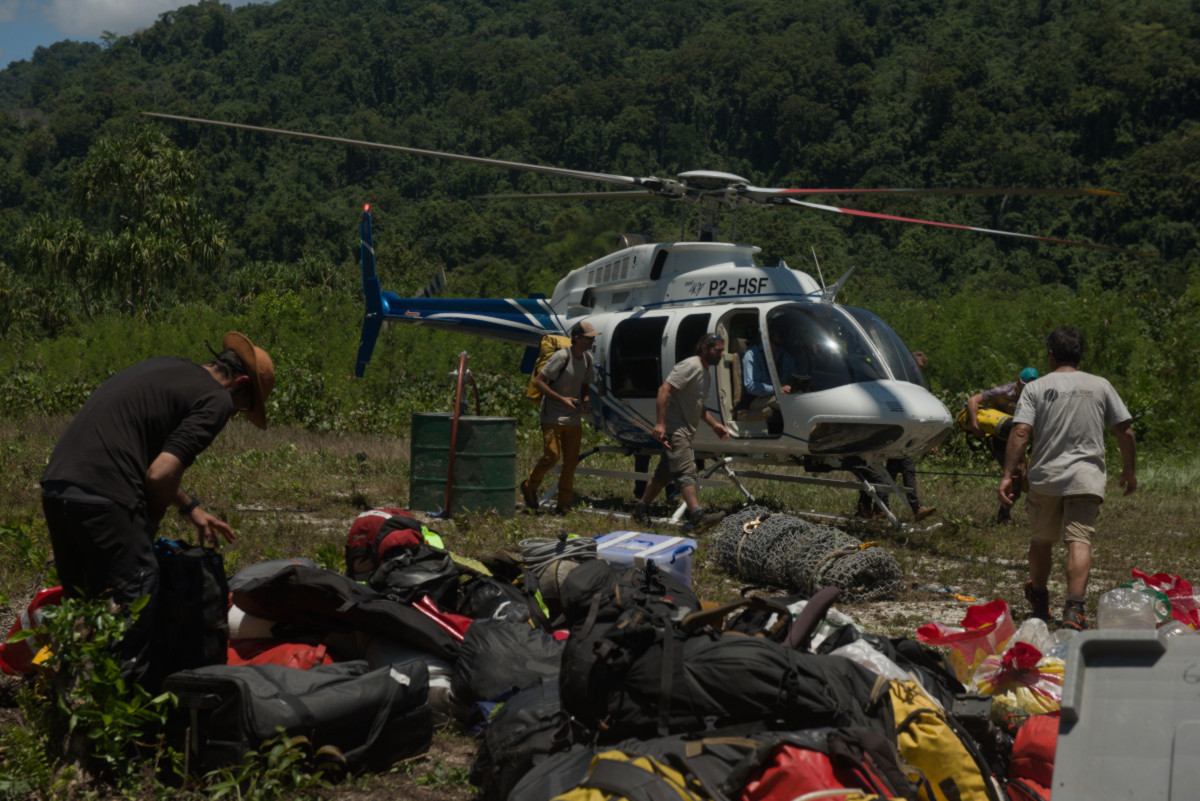
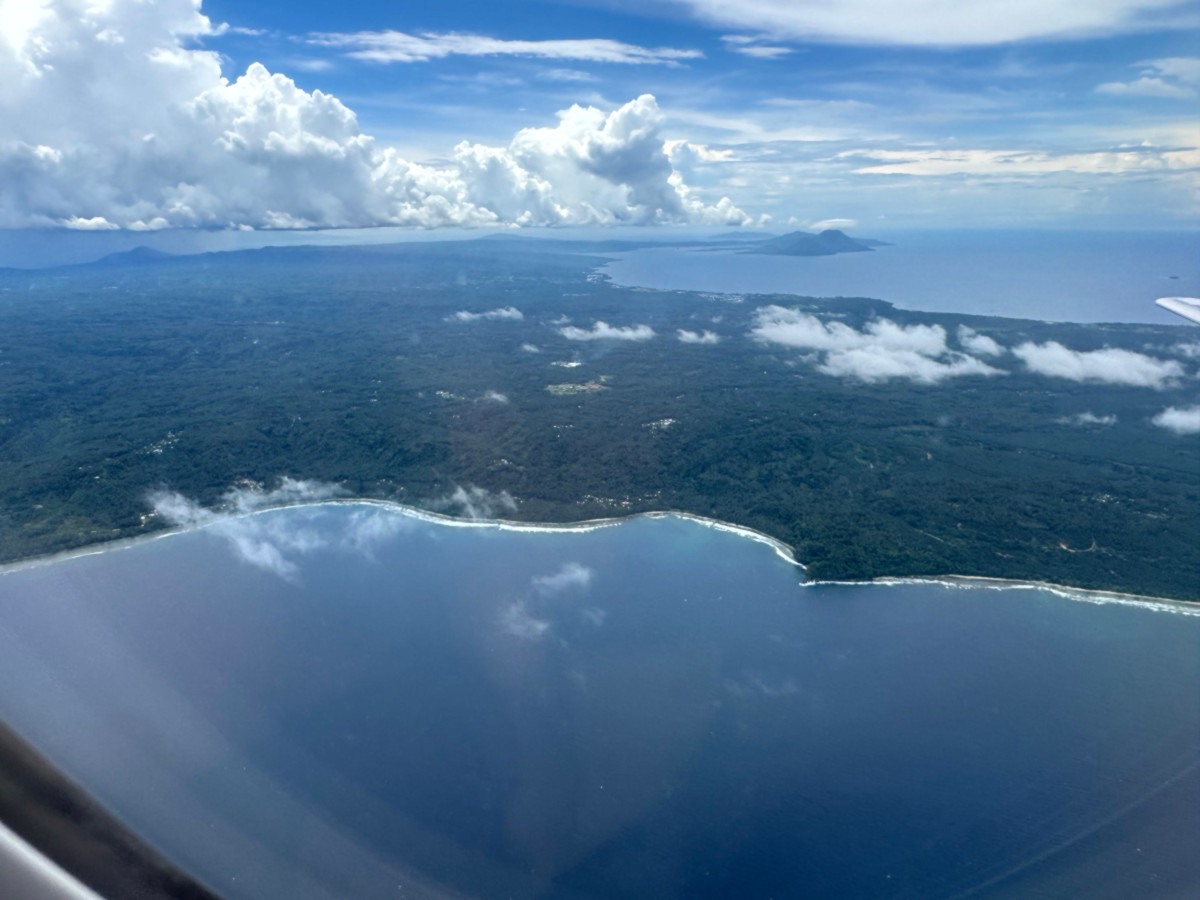
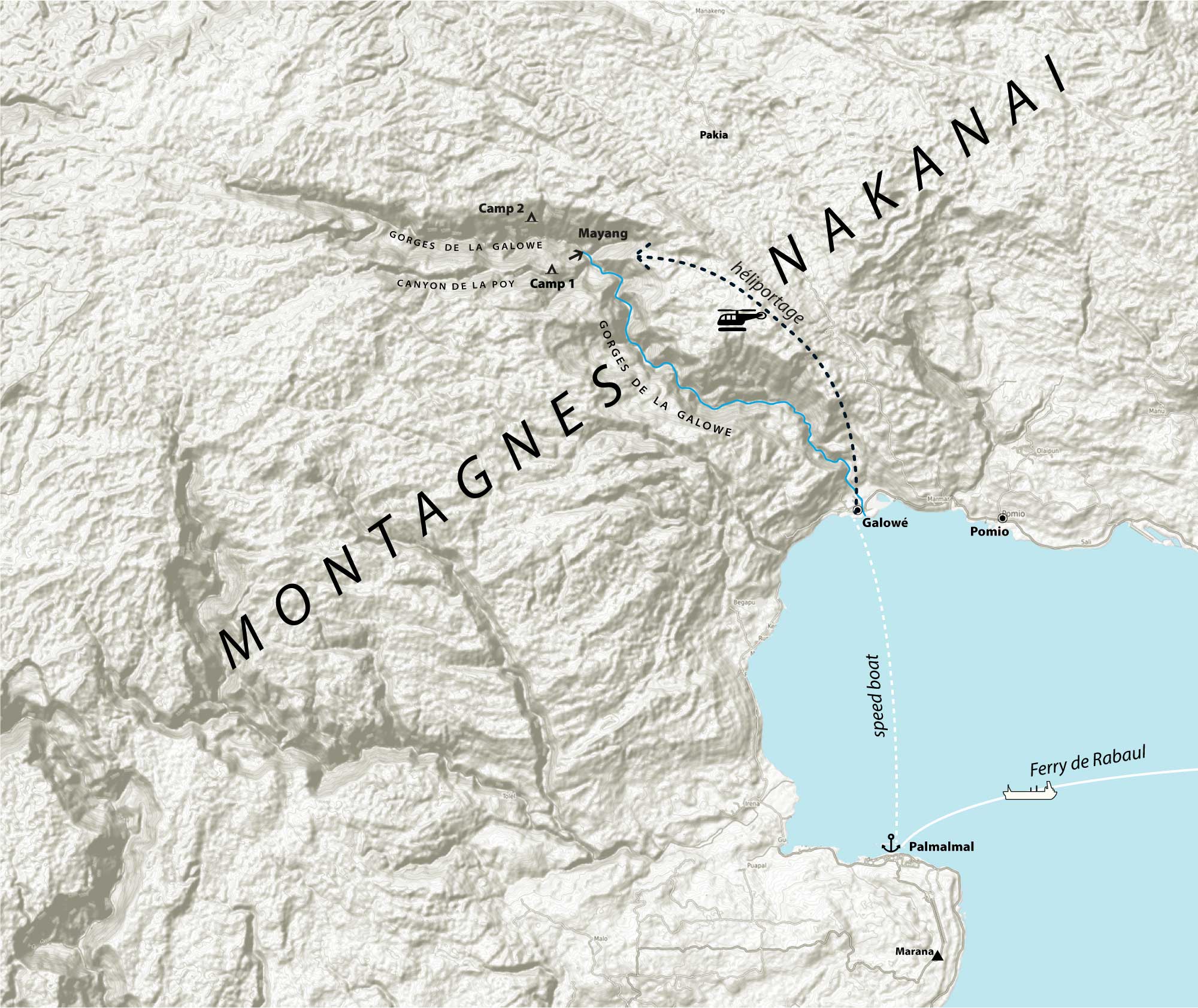
A special shuttle service between Palmalmal and Galuwé is arranged after the community gives its consent. Fueling the helicopter for recon flights and numerous flights to the camps, alongside transporting all the people, food, equipment, and fuel required for camp life, requires roughly fifteen boat trips. After the final boat ride, the helicopter flew straight from its base in Kimbé to the agreed spot close to the village of Galuwé. Michel, Luc-Henri, and Bernard took off for the crucial airborne reconnaissance phase with little time to spare. They have three goals in mind. In order to establish camps 1 and 2, they first visually survey about fifteen locations that Bernard and our cartographer, Benjamin Lans, had appropriately placed on the map as possible landing spots for the pilot. Second, using satellite photos to identify pre-identified "major" speleological objectives (such as sinkholes, cave entrances, vegetation abnormalities, etc.). Thirdly, creating a preliminary set of images of the expedition's exploration areas for the Arte documentary.

The welcome ceremony is performed by the Tagtagapuna Cultural Group.

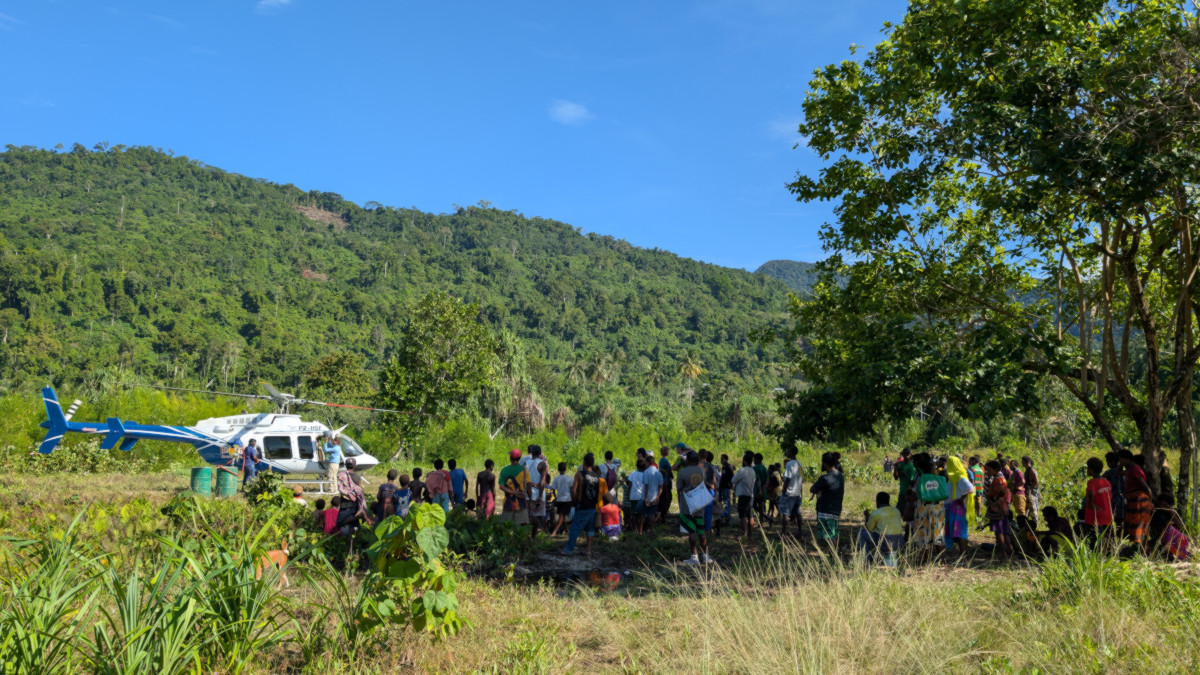
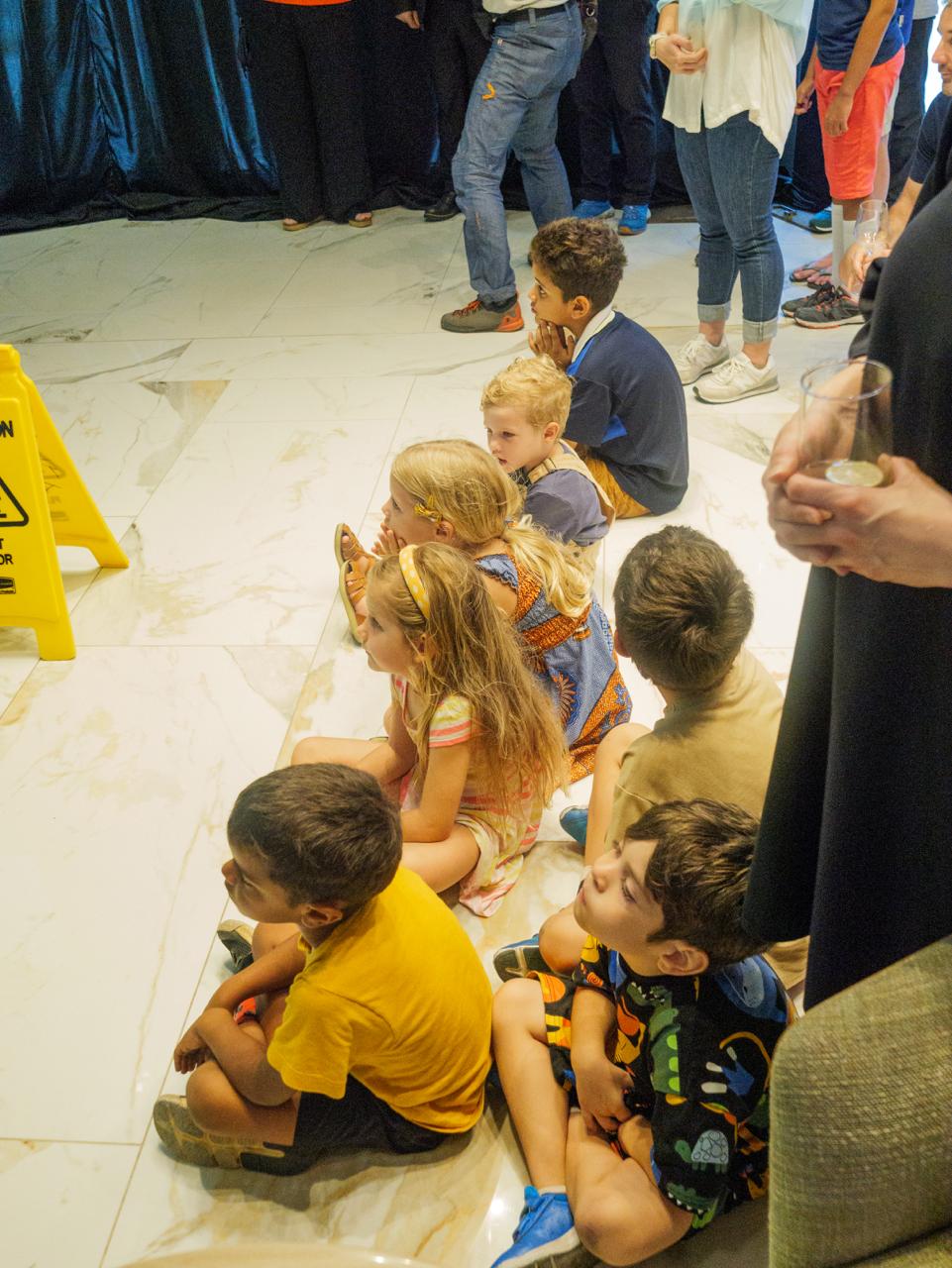
Meanwhile, to the sound of drums and tribal music, around a hundred Galuwé locals clad in traditional costumes greeted the remaining members of the Center Terre crew, who stayed on the ground. Local officials were waiting for them when they were escorted to a sizable open area in the village. The ceremonial talks are punctuated with dances, which are first introduced by Mr. John Liskia and subsequently by Ward Counselor Charles Légère.

The helicopter completes the reconnaissance phase around 5 p.m., having flown for about two hours. The two locations to establish Camps 1 and 2 are confirmed. The scouting team joins in the celebrations. Bernard thanks the entire Galuwé community and goes over the key elements of the expedition with all the residents. Four young men from the village participate in an initiation ceremony at the conclusion of the celebration, and the locals give the expedition members a joyous feast consisting of dried and smoked fish, vegetables, and fruit.

Initiation ceremony for three young men from Galowe
Charles Legere, Galowe Ward Counselor
John Liskia, Pomio District Administrator

Helicopter transfers

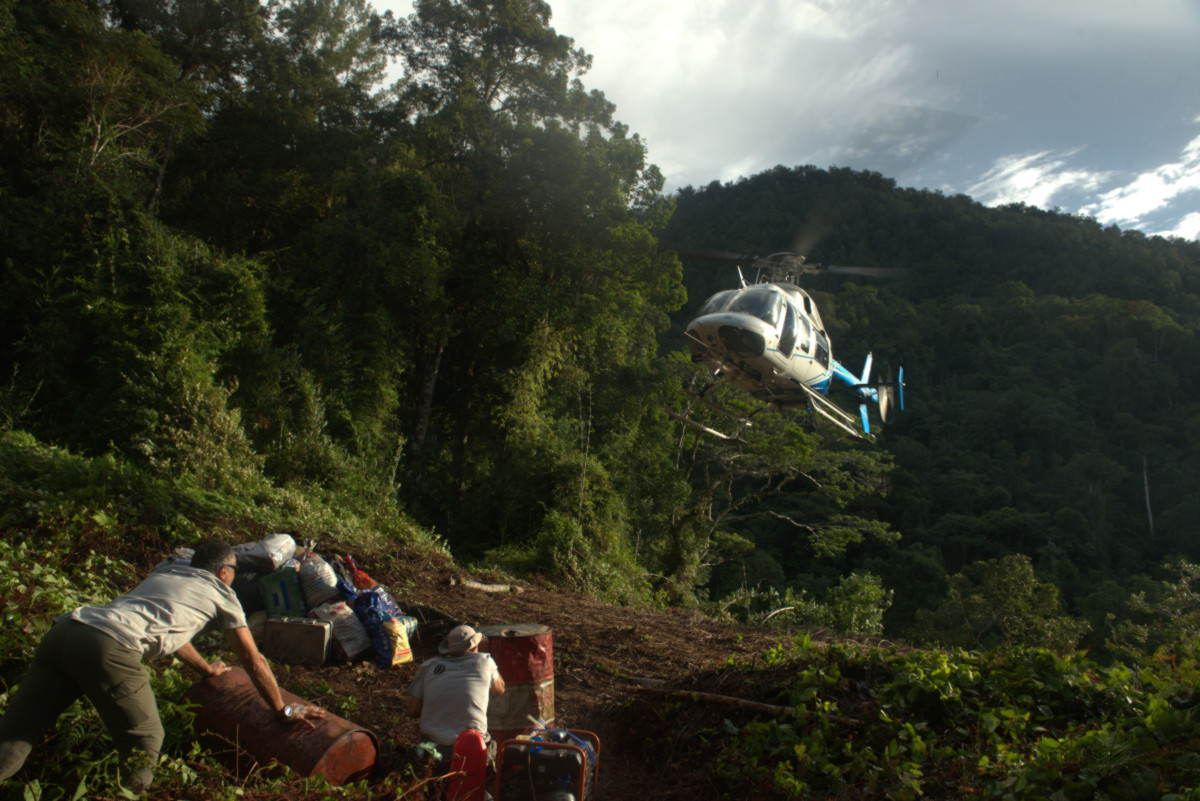
At 7:30 a.m. on January 26, Heli Niugini's Bel 407, piloted by Captain Jayden, lands on the makeshift "Drop Zone" (DZ) for the day's helicopter transfers after arriving from Palmalmal, where it spent the previous night. The first people to board the chopper and travel to the location of Camp 1, which is closest to the Mayang emergence, are Mehdi, Nicolas, and Denis. They are in charge of making the landing area clear so that persons and equipment can be dropped off in the Drop Zone. After completing the necessary reconnaissance of the approach and landing area for Camp 2, Captain Jayden concludes his flight.

Galowe Drope Zone
Galowe Drope Zone

The first participants are dropped off to Camp 1 right away. After that, Mehdi, Nicolas, and Denis are picked up and brought to Camp 2 to tidy up the DZ and remove any vegetation. Following that, a number of helicopter flights take place, first to Camp 1, which is 17 km straight from Galuwé, and then to Camp 2, which is 2.2 km north of Camp 1. Twelve return flights are made by the pilot. However, operations had to be halted at approximately 2:30 p.m. Approaches to Camp 2 with the porter's net were getting riskier as the wind had increased significantly at altitude. At that time, twelve people and four nets still remained to be transported from the Galuwé DZ.

Helicopter operations resumed at dawn on Tuesday, January 27, when the remaining team members and equipment were transported to Camp 2. At about 2:00 p.m., the operation came to an end when Michel and Bernard were dropped off at Camp 1. Charles Légère, the ward counselor of the village of Galuwé, who was having a great time on his maiden flight, was with them.

Heli Niugini's Bel 407 begins cargo rotations
Cargo arrives at Camp 1
Drone view of Camp 1

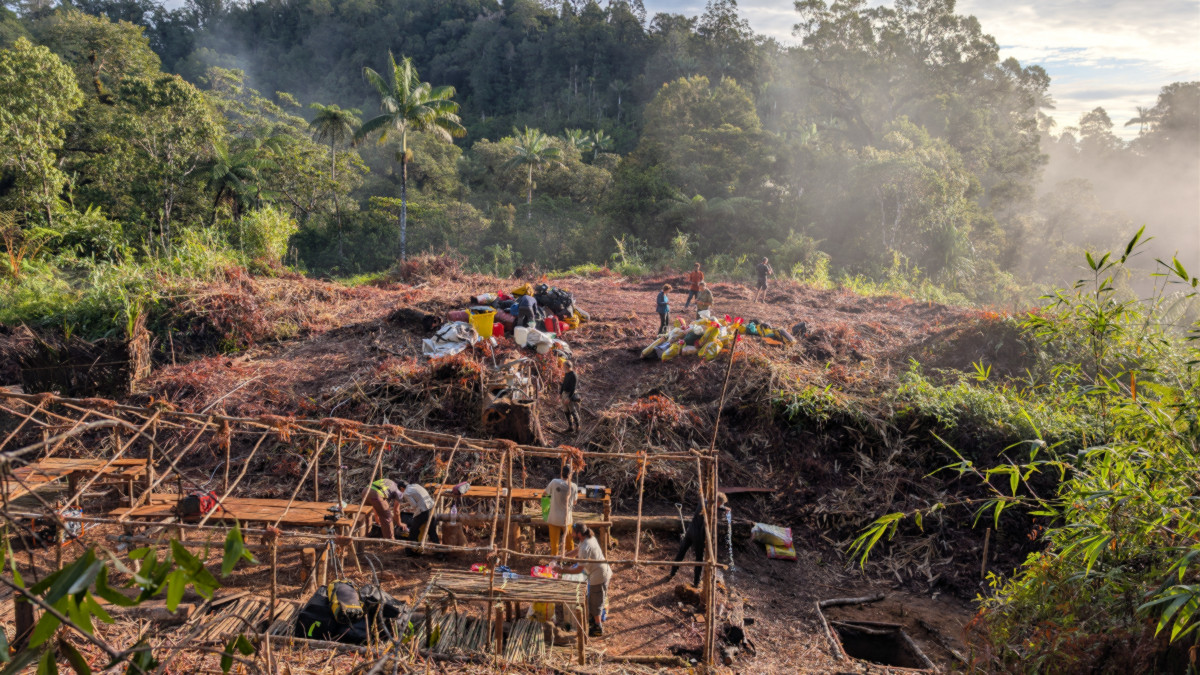
Setting up the camps

As soon as the first helicopter drops landed in camp areas 1 and 2, personal shelters were set up, followed by the construction of the shared covered area. Two Galuwé residents who are on the crew at camp 1, Joash and Brendan, assist in constructing the ridge beam-topped supporting structure on posts. To allow rainfall to flow to harvesting points, a huge, translucent tarpaulin spanning 12 by 8 meters covers the entire structure. The same is true at Camp 2 with Nervilles and Jack, two other Galuwé locals who have arrived to offer assistance.

Common shelters are built with the aid of our four participants from Galowe

Each common tent has a floor area of about ninety square meters. These communal shelters will eventually have all the amenities required for food storage and communal life. This includes a science lab section, a kitchen, a big table for meals, and a computer area with computers, phones, radios, and chargers for all electrical devices. For best preservation, all food is also sorted right away into big, labeled fertilizer bags that are hanging from the side rafters. One part of the bags holds food reserves for February, while the other part holds food that is ready for consumption.

The camps are gradually taking shape.

Priority is also given to getting ready for rainwater collecting, with containers placed along the roof tarpaulin gutters even if it isn't raining yet. Each camp receives a helicopter delivery of only 300 liters of water, which will inevitably be swiftly depleted by its 12 to 15 occupants.

Last but not least, during these initial days, each member finds a few invaluable minutes to set up or perfect their sleeping space—in a tent or hammock, depending on their preferences.

Individual sleeping spaces

First field trips on Wednesday, 28th.

First teams are assigned to each camp with two goals: to find water resources so that reserves may be secured in the event of a protracted drought, which has been going on for more than five days, and to create scouting routes or trails leading to previously determined targets. Franck, Didier, and Natalia lead the reconnaissance raid to the dry Poy Canyon at Camp 1. They approach the edge of the canyon but are unable to reach its bed due to cliffs that are more than 20 meters high. Nicolas and Elven are the first to go exploring at Camp 2. Their excursion proved fruitful with the finding of a reliable water source less than an hour from their camp.

The scientific activities begin

The first bat net is installed on the evening of the 28th, and the first wildlife surveys and samples are collected, some of them at night. To the delight of Pita and Romain, who consider this to be a promising and richly varied area, the first bat is trapped. Elven is working hard at Camp 2 as well. Toads, snakes, spiders, scorpions, and insects of various sizes are evidently abundant in the early collections. Here, it's best to keep your hammock mosquito net securely closed!

Local residents
Local residents
Local residents
Local residents
Local residents
Local residents
Local residents
Local residents

29 and 30 January, scouting raids intensify

A team on Camp 2 embarks on a scouting mission to what is now known as "Mayang's Eye." Based on satellite photos, the target appears to be either a large sinkhole and a possible entry point to the Mayang River's underground network, or it could be a deep giant's pothole over 20 meters in diameter that is occasionally full and occasionally empty. Lionel and Sylvain stop actually 500 meters away from the target. To be continued.

Lionel and Sylvain scouting one potential objective

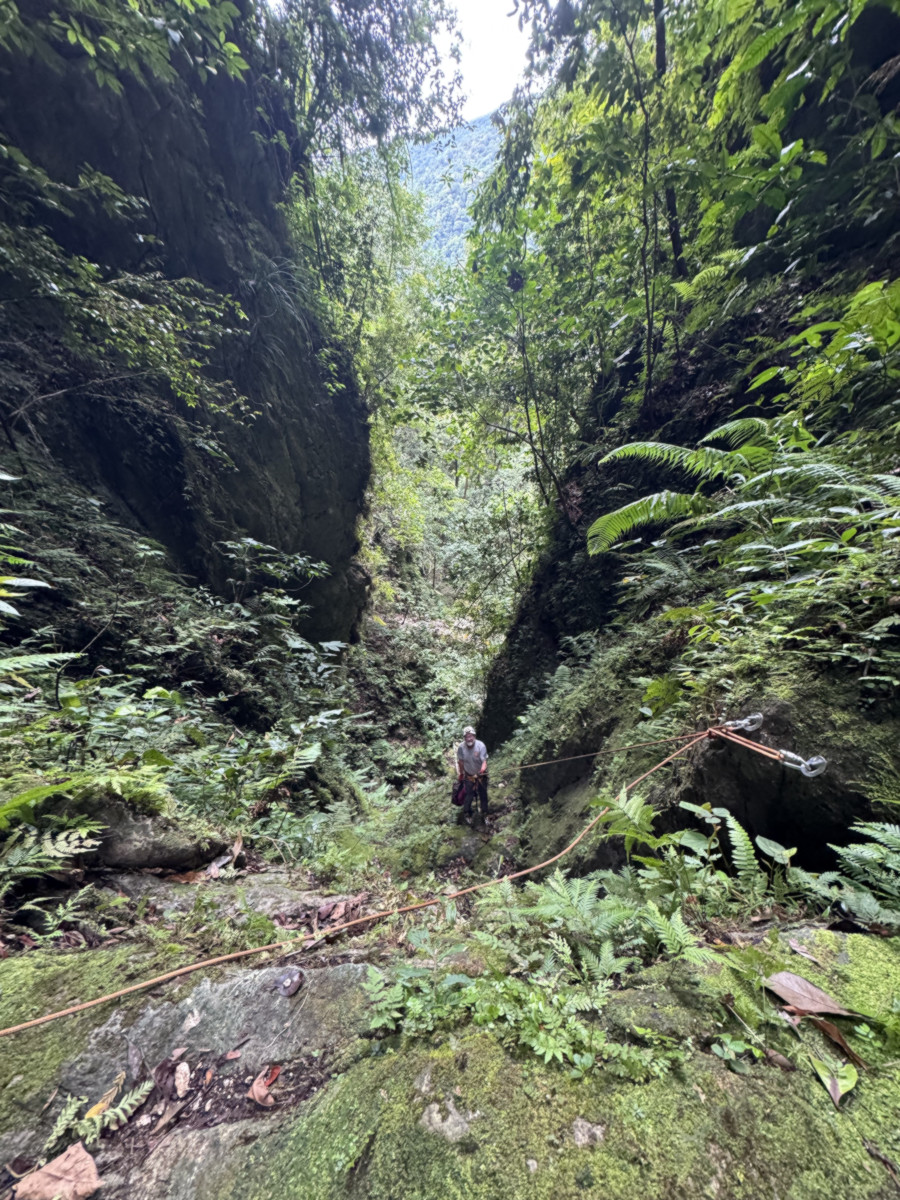
Another group, made up of Nicolas, Julien, Mehdi, and Jack, stop at the top of a 30-meter waterfall after descending a portion of the canyon that faced Camp 2.

Descending the canyon

At dawn, Michel, Joash, and Bernard leave Camp 1 and head west. They want to reach the bottom of the Poy canyon by avoiding the cliffs that stopped Franck's squad the previous day. They succeed and get it to the bottom of the canyon after an hour and a half. After that, they can continue along the riverbed for almost a kilometer and a half until stopping in front of a ten-meter drop that is inaccessible without the right gear. We'll need to come later.

Plateau and canyon for Camp 2 and "Water mission" and Mayang for Camp 1

Two teams are leaving Camp 2 this Friday. The first is moving in the direction of a large sinkhole seen on the map the previous day, which is located above the camp on a high plateau. The group launching this route includes Katia, Laurent, Jean Marc, Elven, and Julien. Sadly, when they finally arrive at the depression after two hours of slicing through vegetation, they discover that it is an unattractive blind sinkhole.

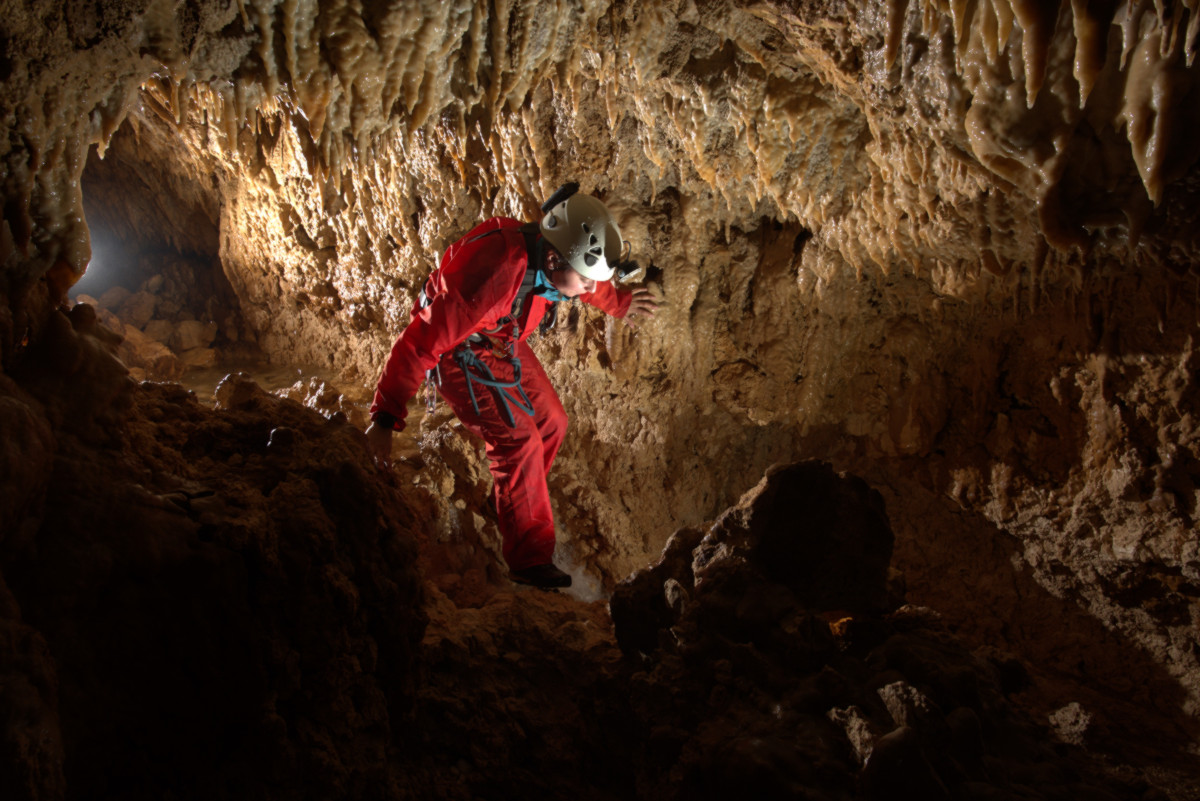
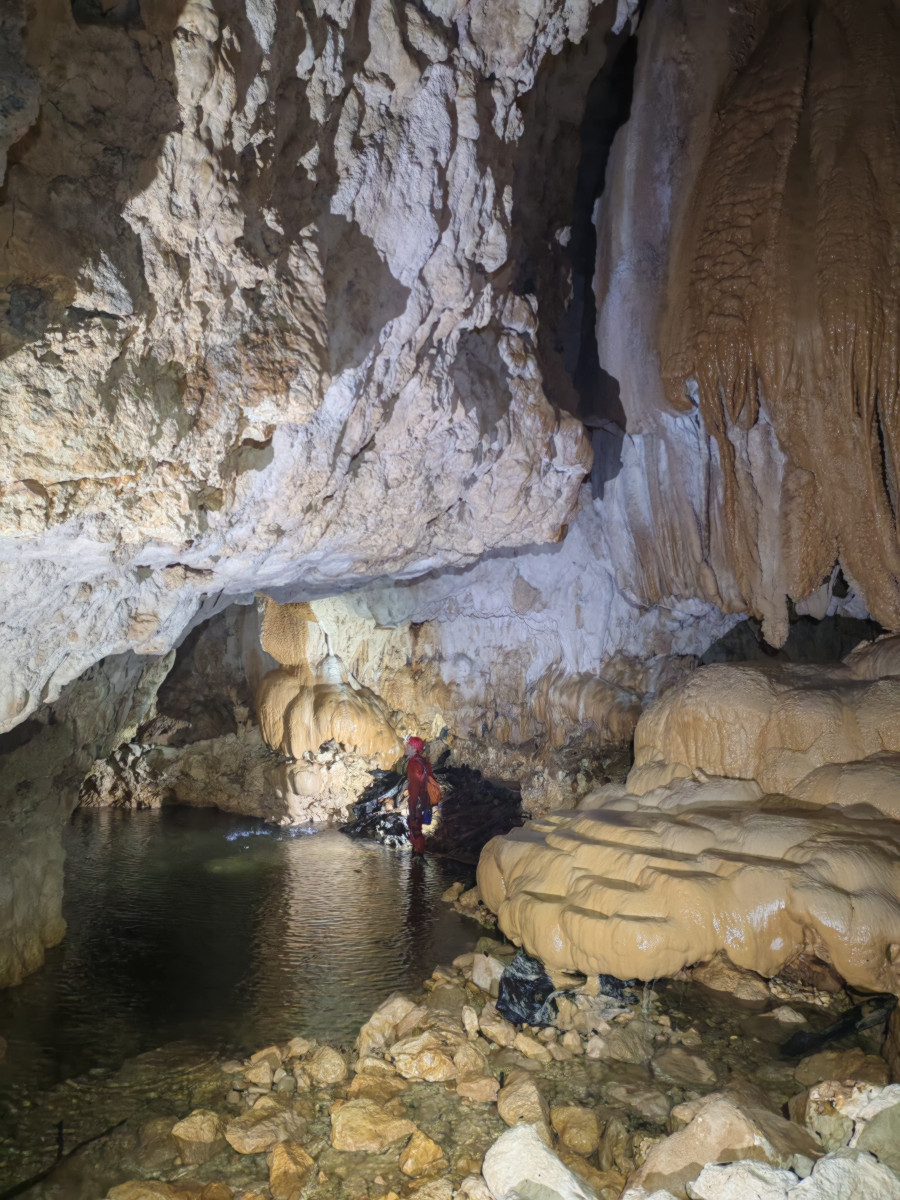
Sylvain, Lionel, and Nicolas made up the second team, which go back to the canyon they had visited the day before. They down two waterfalls this time, one of which is thirty meters high, and their efforts paid off. At the foot of the final vertical drop, they find a cave. For the Objectif Mayang 2026 expedition, this is the first exsurgence-style cavity. It is true that its size and volume are still small for the time being, but it provides access to the base of a vertical drop with an upper gap that is around 5 to 6 meters high, leading to an ascending cave network. It goes on!

First cave found in this expedition

For the Camp 2 team, a sudden occurrence takes place during the night: Between two separate bivouacs, a huge tree toppled. As a result, significant camp relocations are in progress. More dread than damage... less damage!

At Camp 1, collecting water has become the priority. With only roughly forty liters remaining in the camp, the fifteen people there will only be able to survive in restricted mode for a maximum of twenty-four hours.

Teams at Camp 2 ready to head to their objectives

Two teams set off:

  • In order to get water, one of the two teams sets out to reach the dry bottom of Poy Canyon. The people in charge are Franck, Natalia, Didier, Yann, Patrick, and Christophe. The first attempt is made in the direction of the Poy Canyon, which is the shortest path from the camp, but it ends abruptly at the top of a 150-meter-tall cliff. The decision is then made to collect water from the two small basins spotted the day before by Michel and Bernard.
  • The other team, made up of six people, sets off towards Mayang and Galuwé river: Luc-Henri, Michel, Mowgli, Bernard, with Joash and Brendan leading the way.

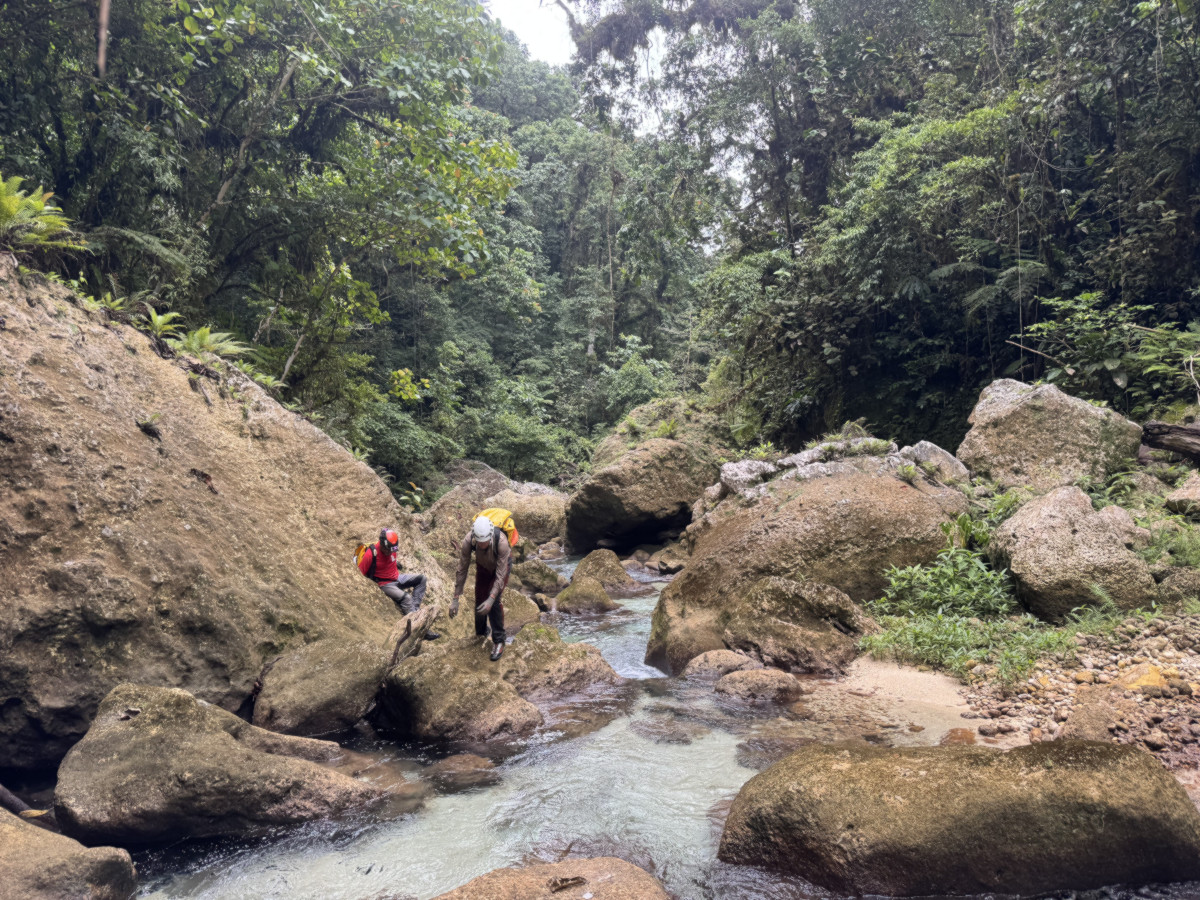
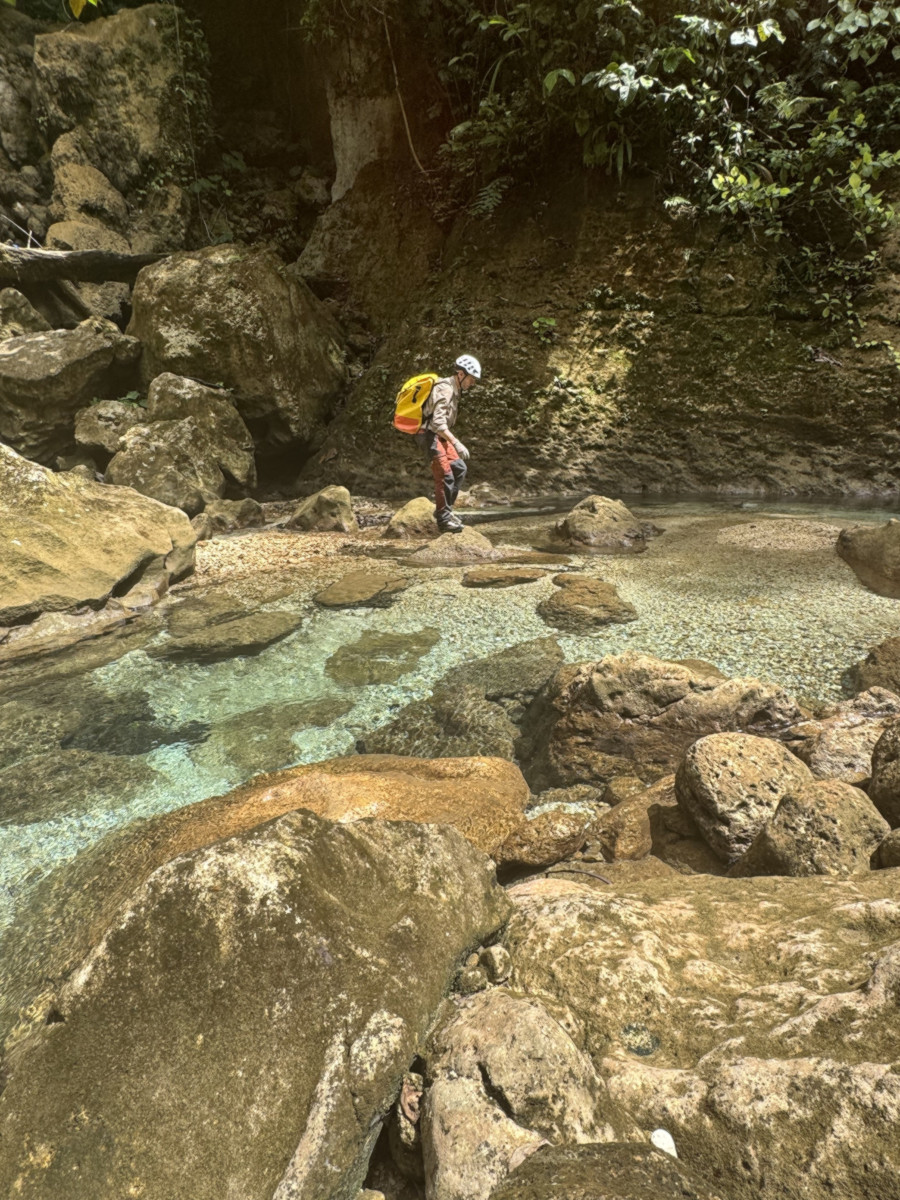
The bottom of the Galuwé is reached approximately 300 meters upstream from the confluence with the Mayang, following two hours of rapid descent and a loss of elevation of over 600 meters. The scene is amazing, and the force of the Mayang colliding with the Galuwé is breathtaking.

Forty liters of water are loaded up after a brief bath. After that, the group heads to the Mayang water spring, which is situated roughly 70 meters above the Galuwé River. The many cliffs that must be overcome make the trek more difficult.

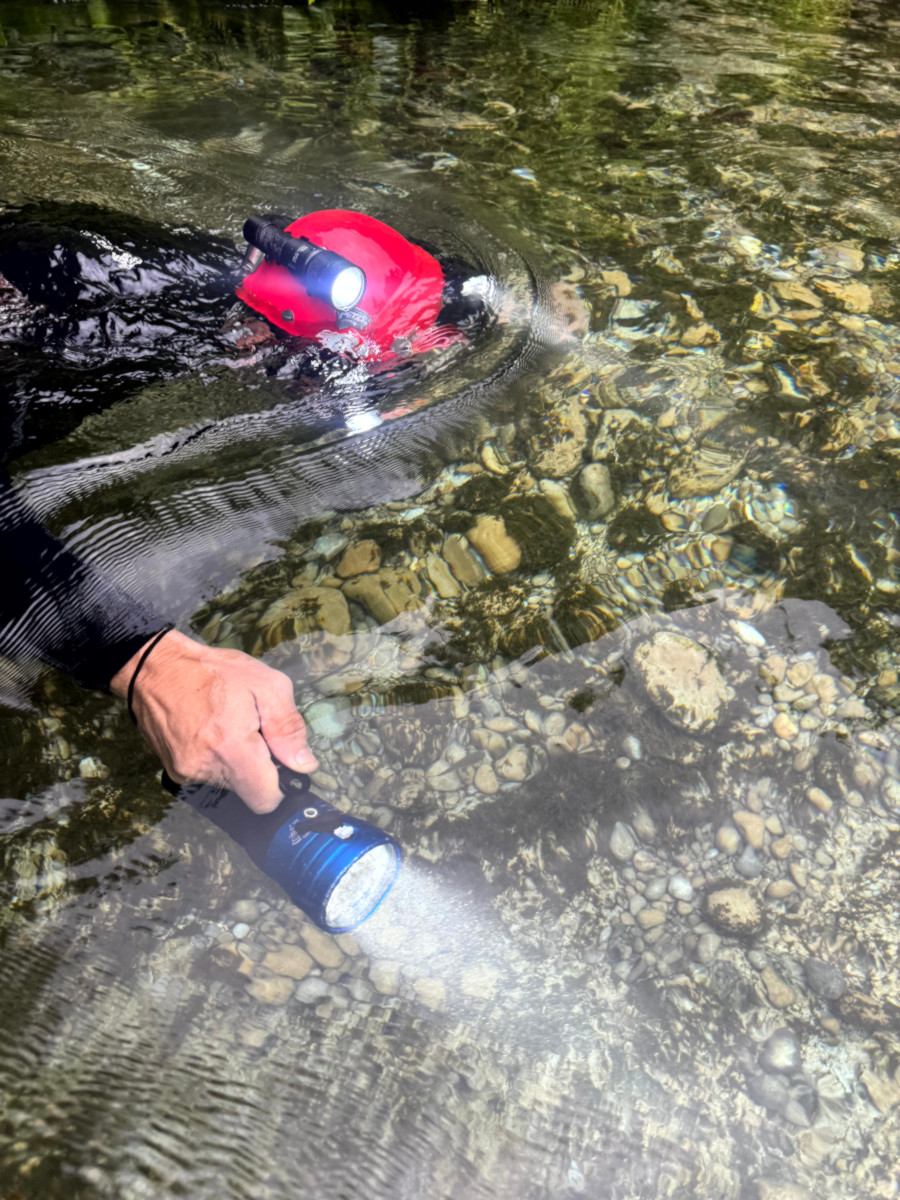
After an hour of hard work, the team eventually reaches the Mayang exsurgence, a high-pressure water source that pours out more than ten cubic meters per second between two strata of rock, . It's obvious that Mayang is impenetrable, yet what a marvel!

Time is ticking. It is 3 p.m. when Bernard signals it is time to return. At around 6 p.m., the team finally reaches Camp 1.

Over 100 liters of water arrived to the camp today, saving it from the water crisis. It has been a wonderful day.

However, there is still a hint of disappointment: no cave entrance has yet been found, despite all the kilometers covered.


Publication précédente


Ultima Patagonia 2023

Madre de Dios

Expédition Ultima Patagonia 2023

Ultima Patagonia 2019

Madre de Dios

Expédition Ultima Patagonia 2019

Ultima Patagonia 2017

Madre de Dios

Expédition Ultima Patagonia 2017

Ultima Patagonia 2014

Diego de Almagro

Expédition Ultima Patagonia 2014

Ultima Patagonia 2010

Fourth expedition to Madre de Dios

Expédition Ultima Patagonia 2010

Ultima Patagonia 2008

Second Franco-Chilean expedition

Expédition Ultima Patagonia 2008

Ultima Patagonia 2006

First Franco-Chilean expedition

Expédition Ultima Patagonia 2006

Bornéo 2002

Expedition into the caves of Kalimantan

Expédition Bornéo 2002

Mongolia 2001

Reconnaissance expedition

Expédition Mongolie 2001

Ultima Patagonia 2000

Great expedition to Madre de Dios

Expédition Ultima Patagonia 2000

Ultima Esperanza 1997

First expedition on Diego de Almagro

Expédition Ultima Esperanza 1997

Diego de Almagro 1995

First reconnaissance

Expédition Diego de Almagro 1995